Showing posts with label character design. Show all posts

Monday, January 23, 2017

Comic Project Work Flow for Indies

Work flow changes from person to person and from studio to studio, but many have several similarities.  I'm going to provide a simple work flow for a comic project from concept to finished product.  I'm not going to touch on publishing or distribution.  I'll save that for another post.

Practically these will be the steps you will more than likely take in create your comic.  Feel free to customize it to something you feel comfortable with.  This is the steps towards creating a comic project:

  1. Concept
  2. Story & Script
  3. Pencil Sketching
  4. Line Art or Inking
  5. Coloring
  6. Lettering
  7. Editing of Final Draft for Print
Concept

Sand Still, Stay Silent Webcomic
If you haven't already, get yourself into the habit of brainstorming for story ideas as a daily thing.  Whether you're walking the dogs or doing the dishes (notice I'm picking simple chores and not during brain surgery or at your other job talking to customers...unless comics is your main job, of course) go through scenarios from your everyday and add something special to make it interesting.  You see the garbage man picking up the trash...so imagine if he found a dead body or some sort of alien device in the bin.  If you come up with something you really like then write a short paragraph like a pitch for it.  Keep it simple.

This is also a good time to come up with locations.  Draw some thumbnail sketches of places that you would like to use as part of your design.  Create rough design for characters for the story.  Come up with hero(es) and villain(s).

Story & Script

Putting together a story requires organizing those ideas you gathered during the concept stage. Decide how long you want to work your story, a one shot or spread throughout several issues.  The main difference is working with a story "Arch" in making several issues work together under one main theme and plot, while the one shot only deals with the story at hand.

Bul & Bal by Marko Djeska
Stories have a beginning, middle, and end.  Use a 3 act structure to organize your story.  When you feel a lot more comfortable with story telling explore other styles.  The beginning, also known as the first act, is used to introduce the reader to the characters and settings.  It also introduces o them the problem that will form the story known as the conflict.  Many story tellers use a "hook" to gain the reader's interest during the first act.  The hook is an enticing situation that creates excitement or intrigue. The second act plays out as the body of the story.  It illustrates the challenges faced by your hero(es) to find a resolution for the conflict.  At the end of the second act is the climax, or the main battle.  Finally, the third act is the resolution.  The villain is defeated or plan is foiled.  For series with several issues plan on having a cliff hanger at the end of the story to keep your reader wanting to explore the next issue. 

Once you have the story organized you'll want to break it down into a script format.  This is when you start creating scenes and dialogue.  Each page has panels.  You'll have to describe what's going on and add the dialogue, captions, and narration for each of these panels.  Keep in mind when describing the action in the panel that you're limited to an action or two.  There is also a limit on how many words per balloon per panel.  Pacing is very important in comics.  The general rule is fewer panels per page for action scenes and more panels for slower pacing to create tension.   

Pencil sketching and the rest will be explained in a latter post.

Monday, December 19, 2016

Concepts for Clients

One of the best ways to acquire new clients is to provide concept work.  You can't rely on a portfolio and a few booths setups at your local comic con.  Notice that clients aren't knocking on your door or sending you emails?  You have to get out there and work to build up your client bank and referral system.  What this simply means is that you have to go look for work by enticing writers or project managers to hire you.

There are many opportunities around you everyday, but many of us are so focused on our art projects and our tendencies to be a bit introverted that we let those opportunities slip away.  Share your art as often as possible.  Pull out your sketch book at a coffee shop or book store.  You're basically telling the world that you create art.

Writers interested in arts tend to ask lots of questions about your work habits and fees so be prepared.  Decide on your service...penciler, inker, colorist, etc.  Know your turn around time: the time it takes you to complete a comic page.  Have a page rate in mind: how much you charge per page of art work.  Its ok to be negotiable with your fee but have a ball park figure to start off with.  Most clients will find this convenient and will feel a bit more confident hiring you.

Feel free to explore ideas with writers.  Many of them have ideas brewing or work with other artists in the past and might be ready for a new project.  Use their past projects as a stepping stone and recreate their characters or settings in your art style.  People appreciate the enthusiasm and seeing their ideas come life.  But be warned, DO NOT USE THIS TACTIC IF THE WRITER IS ALREADY WORKING WITH ANOTHER ARTIST ON THE SAME PROJECT THAT YOUR PITCHING FOR.  This will create a rift and in
some cases result in legal issues depending on the contract in place between that writer and artist.

Fill your sketch book with other characters and places than the usual Marvel or DC.  Make your own.  This shows potential clients that you are creative and able to conceptualize ideas outside the usual mainstream.
       

Monday, December 5, 2016

Creating the Adventure

Comics can hold such a magical grasp on an audience.  They can take you to wonderful and exotic places.  Some stories are so bold they become classics.  Everyone strives to create a masterpiece.  The best way to start is by building a fantastic world full of incredible things and characters.  Here are some ideas to think about when planning out your epic comic:

Genre 


Star Wars and Star Trek are leaders of there sci-fi space genre while Harry Potter and Lords of the Ring lead the way of Magic, sword and sorcery fantasy genre.  Choose a genre that you are familiar with and are passionate about.  There are many to choose from.  Here a re a few to consider:
  • Action/Adventure (James Bond, Jack Reacher, Superman, Avengers)
  • Mystery (Batman, Sherlock Holmes,)
  • Western/Eastern (Jonah Hex, Wolf and Cub)
  • Fantasy/Sword and Sorcery (Lord of the Rings, Conan, Red Sonja)
  • Fantasy/Magic (Dr. Strange, Harry Potter,)
  • Teen (Archie, )
  • Sci-Fi (Star Wars, Star Trek, Power Rangers, Voltron)

World Building


Make an Art Bible for your project; a file with the collection of notes and references.  You need a spectacular setting to immerse your audience.  This is very important if want people to feel part of your world.  Think about where you want your story to take place, the culture in place, and even the architecture that influences the buildings.  It helps to create some locations in good detail. Here are a few details to keep in mind:
  • Land or terrain (Dessert, Space, Ocean)
  • Architecture/Design (buildings, landscapes, vehicles, weapons)
  • Culture (beliefs like in the "Force" or religion, councils or federations)
  • Customs (Traditions, slang, code, ethics)
  • Groups, Guilds, Associations 
  • Diversity  

The Great Conflict

Don't be afraid to think in epic proportions for this part.  Remember it will have to be something so impressive that it spans through all of your stories.

(Continued in Issue #1)

Monday, November 14, 2016

Best Self-Marketing Practices as an Artists

You keep hearing about you need to put yourself out there... but how do you do it and what works best?  I've compiled a small list of things that have worked for me and artists that I know along with what I've read in comic artist books and marketing books.  I'll try to keep it simple and straight to the point:

Social Media:  Facebook remains the largest most influential social media monster out there.  Besides having your personal page for family and friends, create an artist page for yourself with a good amount of art samples for your gallery which will serve as your portfolio.  Connect this profile to your Instagram account...you should have an Instagram account if your an artist.  Communicate daily or at a minimum every few days with either art or updates on your latest project.

Business cards:  You have to have them.  You can get them for a good price off of Vista prints.  They are a must.  Everyone you meet that is somewhat interested in what you do or would like to work with you will appreciate a business card.  At the end of the day you are a salesman selling your service or product.

Networking:  Oh yes...here's the part so many dread.  You need to go out and socialize.  Many artist are very introverted so this can play a particular challenge.  Go to comic book stores and comic conventions.  How to engage in a conversation: Start off with a nice complement (comic art related works well) and smile.  Then follow up with an introduction... "Hi, my name is Andres.  I draw comics."  Have your portfolio with you. Try to avoid showing them your online portfolio on your phone and try to get them to use theirs in order for them to like or follow you.

Small Jobs:  Take on small projects to get your name out.  You can look into magazines for quick 3-10 page projects.  There are also small indie publishers that you can work with but don't expect much money out of it.  You can also go for the Mid-Level publishers.  This will help build up your reputation.  Its good practice on meeting deadlines and meeting editors.

Remember to place your art out there one way or another on a daily routine so that it becomes a habit.  


Sunday, October 9, 2016

Powers and Copy Right

All creators can testify to the satisfaction of making a character for their comic story.  And for the most part this is fun and always interesting.  Most indie characters end up on a self published comic of some sort and usually make their debut in a local comic convention or two.  These characters face many perils in their story but none as devastating as success.  You see once your character becomes popular you begin to gain many secret enemies.  And their weapon is intellectual copy right infringement!

First thing you need to know if you plan to make a professional character for a commercialized story, comic that you plan to sell, is that there is nothing new under the sun.  What I mean is that there are many variations of existing ideas.  what's very important to know is that you try to take very obvious elements from other characters...satire being the loop hole in all of this. 

One of the fist dangers is comes from the origin story.  Have you noticed that there aren't many "Super" anything outside of DC or that the term "Mutant" tends to stay within Marvel as "Metahumans/sapiens" deals with super heroes in DC.  These coined terms are some of the few ways large publishers can trip you up when you begin to head towards a recognizable amount of success.  Magic and religion seem still pretty open as most big publishers barrow from Greek mythology and various religions...especially in today's hot topic arena.  Topcows uses technology to explain their characters super powers and a touch of religion and magic as well.

When you start talking about where you characters get their powers, remember where the land mines are and choose a unique way to explain the source of their abilities or keep it a mystery.


Monday, August 8, 2016

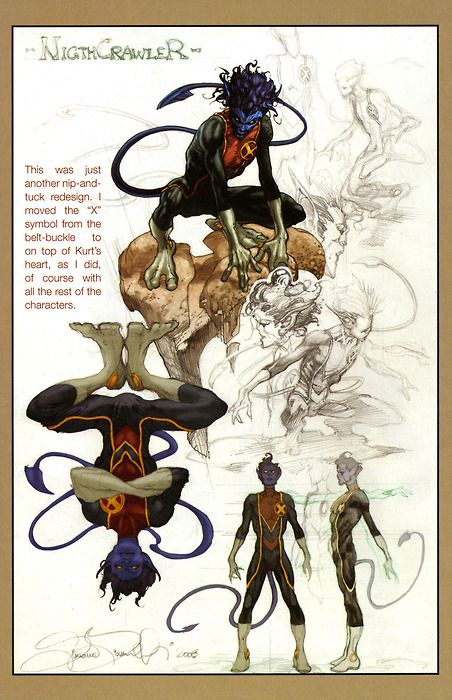
Character Design Basics


Character design is very important.  As key element of your story they will add or take away from the comic.  Your audience should like or at least have a connection with your heroes and supporting cast while either understanding or truly hate your villains.  For comics, character designs also include costume design and powers.  Here's a simple guide on how to work the process.

Concept

This is the rough draft of your character.  Whether a hero or villain, you need to build them up and give them purpose.  Here's where you come up with the back story, name, powers, and motivation.  Make them interesting by getting away from stereotypes and the back stories.  Use things you know or stuff you research:

" Madeline, lost her sister in the war and blames Unicorp, a big war supporter and weapon's manufacturing corporation.  Madeline was trained to be the best infiltrator in the war and now after her sister's death she has gone rogue and infiltrates Unicorp for their true purpose in the war and to expose them to the world."
Get yourself a database of names.  many writers have a book of names from different cultures and nationalities.  Keep cultural websites book marked or keep reference material handy, especially if you plan to have authentic diversity in your comics.  You also want to have a list of super heroes and villain names that you might want to work with.  Try to accommodate the name to the super power or even function of your character

Choosing powers for your characters can be both awesome and frustrating.  The main thing here is not to over do it.  The more powers, the harder and more complex the challenges you have to create to keep your comic interesting.  Today's reader is constantly asking why or how come...you need to provide an intelligent and reasonable answer.  A quick search online will provide a list of common comic book super powers.

Costume design is important. Choose a design that builds or complements your character's role or power.